Lots of work on the economics of climate change has sought to estimate climate change damage. As long as these estimates have been produced, there has been a debate about whether we should expect actual damages to be larger or smaller than the estimates.1 A common argument that actual damages should be smaller comes from folks focused on adaptation—the actions people take to prepare for or adjust to a changing climate. The basic argument goes as follows: our current estimates of damage are typically based on the effects of short-run variation in weather. But climate change is persistent and (at least partly) anticipatable, giving people the time and incentive to respond in ways that should reduce their damage.2 Some folks formalize this a bit by appealing to La Chatelier’s principle that long-run supply elasticities are larger than short-run elasticities.3 The simple point I want to make is that this argument need not be right.
Beyond La Chatelier’s principle
La Chatelier’s principle is a rule of thumb, not a law. Whether long-run elasticities are larger or smaller than short-run elasticities depends on whether adaptation actions are intertemporal complements or substitutes (nicely formalized by Castillo (2021), who I took the section title from, though applied to climate mitigation rather than adaptation). Intertemporal complements, following Castillo’s definition, are actions that reinforce each other over time. Taking some action today makes me want to take more action tomorrow. La Chatelier’s principle holds for intertemporal complements. Intertemporal substitutes, naturally, have the reverse pattern. More action today makes me less willing to take action tomorrow. These are actions that actually have larger short-run elasticities.
Is climate adaptation likely to be a case where actions are intertemporal complements or substitutes? I don’t know (and would like to know). In the overall economy, complementarity seems to be the general pattern. But there are some clear cases of substitutes.
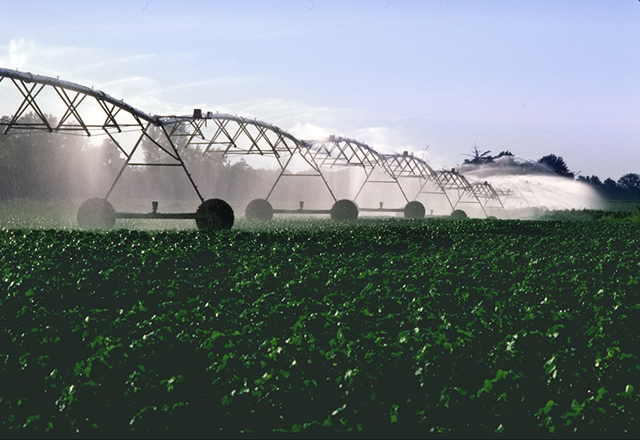
A classic one is groundwater-based irrigation: If a farmer uses up groundwater for irrigation today, then the cost of groundwater extraction goes up in the future. In the extreme case, the cost rises to infinity if all groundwater is exhausted and the farmer is unable to take any groundwater-based irrigation action. This is a case where the short-run response to weather will incorporate more adaptation than the long-run response. As Castillo points out, inputs based on exhaustible resources are generally intertemporal substitutes.
Another that I think about a lot is staying indoors to avoid the heat. We find that this is a highly effective strategy to avoid mortality on hot days, but at some point, you are staying indoors as much as you possibly can—the time budget binds!
One further consideration: Adaptation already in short-run estimates
A further assumption underlying the common argument given above—in addition to the implicit or explicit appeal to La Chatelier—is that damage estimates based on short-run variation in weather are not strongly affected by adaptation. Or said another way, the assumption is that the weather variation is fast enough or unexpected enough that people aren’t adapting to it. As I have pointed out in multiple papers, especially Improving Climate Damage Estimates by Accounting for Adaptation, weather-based estimates can actually include a whole lot of adaptation.
This is especially true given we are in a world filled with weather and climate forecasts. People have access to lots and lots of information that helps them prepare for even short-lived weather effects. Given that very few climate damage estimation papers explicitly account for forecasts, the estimates they contain will be conditional on an unknown amount of forward-looking adaptation. In the above paper, I show that the amount of such adaptation can be quite large—swamping the actual damage effect in the particular case of the fishing industry responding to forecasts of climate variation.
And many important adaptation actions are “fast;” they aren’t subject to the large adjustment costs of capital as in Samuelson’s classic La Chatelier model. Things like staying indoors, mentioned above. Or adjusting labor in response to climate shocks, which we find can take just a few months even in the presence of substantial adjustment costs. Not all actions are like this, and some of the potentially most important “adaptation” actions involving technical change operate on extremely long time scales (from an economic perspective; blink of an eye on geophysical scales). So, again, I’d love to know how likely it is that overall climate adaptation is better characterized by intertemporal complementarity of substitution.
Version history
2026-03-11: First version
-
For a review of this literature focused on conceptual issues including the role of adaptation, see my recent paper with Derek Lemoine and Catie Hausman. Sol Hsiang produced a recent review that focuses on the magnitude of estimated damages for different areas of the economy. Moore et al. (2024) do a really interesting exercise where they ask climate economists to say how they think an “all in” estimate of climate change damages would differ from estimates that have been published in the literature. ↩
-
As just one example of exactly this argument that I happened to be looking at recently, here’s Richard Tol’s argument that climate change damage estimates from Bilal and Kaenzig (2026) are too high: “The economic effects of ENSO have been studied extensively. It is damaging because normal weather patterns are disrupted for a short time. Climate change is different. It is permanent, giving people, companies, governments, institutions, and technologies time to adapt to the new circumstances. As too many others before them, Bilal and Kaenzig estimate a short-term elasticity and confuse it for a long-term elasticity.” ↩
-
See, for example, Burke and Emerick (2016): “While using variation in weather helps to solve identification problems, it perhaps more poorly approximates the ideal climate change experiment. In particular, if agents can adjust in the long run in ways that are unavailable to them in the short run, then impact estimates derived from shorter run responses to weather might overstate damages from longer run changes in climate.” With the footnote: “For example, Samuelson’s famed Le Chatelier principle, in which demand and supply elasticities are hypothesized to be smaller in the short run than in the long run due to fixed cost constraints.” ↩